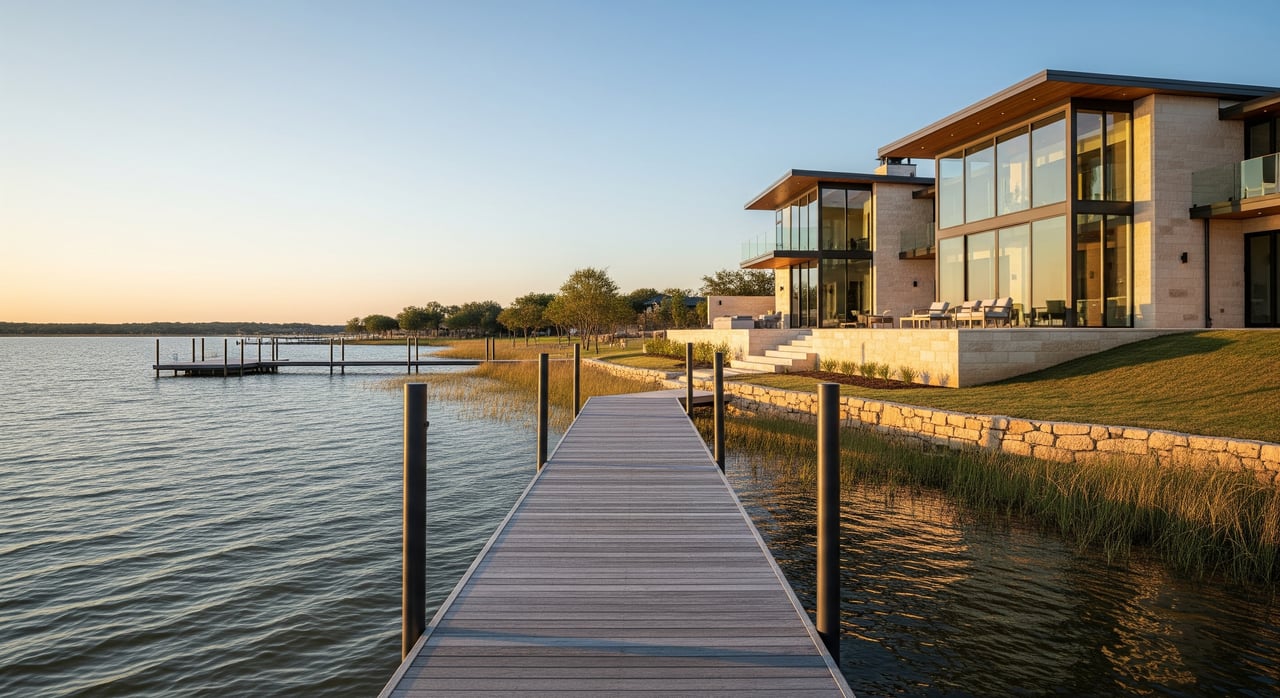
Picture this: the sun slides over Lake Texoma, your boat is tied up steps from your back porch, and weekends feel like vacation. Before you buy that dream lakefront home, there is one big thing to get right — who controls the shoreline and what you can do on it. Lake Texoma has unique rules that are different from typical river or natural-lake properties. In this guide, you will learn the shoreline basics, how permits and leases work, what to check during due diligence, and how to keep your closing timeline on track. Let’s dive in.
Who controls Lake Texoma shorelines
Federal role: USACE project lands
Much of Lake Texoma’s shoreline and adjacent lands are federal project lands managed by the U.S. Army Corps of Engineers (USACE). USACE runs the lake and issues shoreline-use authorizations under a Shoreline Management Plan. These authorizations are not property deeds. They are permits or leases that set what you can build, where, and for how long.
Because Lake Texoma is an engineered reservoir, shoreline rights do not automatically follow from owning the upland parcel. You should not assume private riparian rights just because a lot touches the water.
State and local rules
The State of Texas has roles tied to boating and fishing. Local governments in Grayson County and nearby cities such as Pottsboro and Denison handle building permits, septic and sewer, floodplain rules, and some business licensing. If the property sits inside city limits, city requirements will apply. If it is outside city limits, county rules and floodplain administration control many steps.
HOAs and private covenants
Many lake neighborhoods use homeowners associations or deed restrictions. These can be stricter than federal or local rules. They may cap dock size, limit rental activity, or require architectural reviews. Always confirm HOA rules early.
What shoreline ownership really means
Lakefront parcels on Texoma often have a strip of federal land between the private lot and the water. That strip is managed by USACE. You may be able to cross it to the water, but your right to place structures there is controlled by federal authorization.
If a dock, boathouse, ramp, or shoreline structure is on site, you must verify it has an active USACE authorization and that it can be transferred to you. Some authorizations are assignable with paperwork and fees. Others have special conditions or may not transfer. Do not rely on verbal statements. Get documents.
USACE outgrants and permits
Shoreline Management Plan basics
USACE publishes a Shoreline Management Plan for each reservoir. It maps zones that allow or restrict certain uses and sets standards for size, materials, and placement. The plan also explains how older, grandfathered structures are handled and when they must be modified or removed.
Common authorizations you may see
- Recreational cabin site leases and similar shoreline-use leases
- Dock or pier permits and boat ramp easements
- Marina or boating facility leases for commercial operations
These are contractual authorizations that include permitted uses, maintenance duties, fees or rent, and transfer rules.
Typical limits and standards
USACE often limits dock length and width, the number of slips, and how close a dock can be to a channel or public area. You can expect setbacks from neighbors and rules to protect habitat. Many plans restrict seawalls, bulkheads, riprap, and vegetation clearing. There are design and materials standards so docks are safe and low impact.
Commercial uses face tighter controls. Some outgrants do not allow any commercial activity. If you plan to operate a rental or business, check both your outgrant terms and city or county rules.
Transfer and renewal
Most outgrants can be assigned to a new owner, but only with USACE approval. Assignment usually needs a formal application, proof of sale, a current survey if required, and payment of transfer fees or rent. Some older authorizations have unique conditions. Confirm the exact transfer process and fees before you sign a contract.
Authorizations have terms and are not indefinite. Renewals are subject to review and compliance. USACE can require updates or impose new conditions as plans evolve.
Environmental review
New or modified structures may trigger environmental review for wetlands, endangered species, water quality, or public access. If special studies are needed, expect longer timelines and additional conditions.
Local permits and practical limits in Grayson County
Building and septic
Grayson County and nearby cities issue building permits. Many lake homes use septic systems. Before you buy, verify septic permits, system capacity, and whether public sewer is available or planned. Renovations or additions may require septic upgrades or a tie-in to a public system if available.
Floodplain and insurance
Lakefront parcels often sit in FEMA special flood hazard areas. Order a floodplain determination and an elevation certificate if needed. Your lender may require flood insurance, and the premium can affect your monthly payment. Local floodplain administrators may require elevated foundations or other measures for any new work.
Erosion control and stabilization
USACE and local rules restrict clearing shoreline vegetation and installing hard stabilization like bulkheads. You may need engineered plans and permits for any bank stabilization. Budget time for review and inspections.
Boating, navigation, and safety
USACE and state rules govern navigation and safety. Docks cannot intrude into channels and may need lighting or signage. Local lake patrols enforce safety. Plan dock placement with navigational clearance in mind.
Short-term rentals
Some cities and HOAs require registration or limit short-term rentals. Your USACE authorization may also restrict commercial use of a dock. If rental income is part of your plan, confirm all rules before you close.
Due diligence: a clear step-by-step plan
Use this checklist to avoid surprises and protect your closing timeline.
- Title and deed review
- Confirm boundaries and any easements or covenants that affect shoreline access or use.
- Identify any recorded federal instruments such as leases or easements tied to the parcel.
- Current survey and shoreline relationship
- Order a current boundary survey that shows the upland parcel, encroachments, and the relationship to the lake and any outgrant area.
- Confirm which shoreline reference the deed uses, such as a normal pool elevation, and how that maps to the ground.
- Verify structure authorizations
- Collect copies of existing USACE permits or leases for docks, ramps, boathouses, and stabilization.
- Confirm transferability, annual fees, renewal status, and any compliance issues in writing.
- Cross-check city and county permits for the same structures.
- Contact agencies early
- Ask the USACE office that manages Lake Texoma to confirm status, transfer procedures, fees, and expected processing times.
- Contact Grayson County and city permitting offices, if applicable, to confirm building, septic, and floodplain requirements. Ask about any open code items.
- Environmental and engineering scope
- If you plan a new dock or stabilization, consult contractors and engineers with USACE experience on Lake Texoma.
- Determine if wetlands or protected resources are present that could add time or conditions.
- HOA and deed restrictions
- Obtain CC&Rs and any architectural guidelines. Confirm dock rules, review steps, and fees.
- Financing and insurance
- Confirm that your lender will accept properties with USACE outgrants.
- Gather flood insurance quotes and ask insurers about coverage for docks and shoreline structures.
- Contract contingencies
- Include contingencies for outgrant assignment approval, permits for planned improvements, septic or sewer approvals, and a survey that verifies shoreline relationship.
- Build in time for agency reviews so you can close with confidence.
Leasebacks and transfer nuances
The word leaseback can mean two different things at the lake. One is a simple seller-occupancy agreement after closing. The other is the federal shoreline authorization itself, often called an outgrant or lease. This section focuses on the federal authorization.
Most outgrants can be assigned to a buyer with USACE approval. Assignments need a formal application, proof of sale, fees or rent paid current, and sometimes transfer fees. Some authorizations require that the lessee be the landowner of record. Read the document closely.
There is a risk of non-renewal or modification. USACE can change or end an authorization for noncompliance or when a plan changes. Review the history of renewals for the property and ask how the current plan treats your shoreline area.
Maintenance and liability usually sit with the lessee. Confirm the condition of any dock or structure, who has paid for past upkeep, and whether insurance is required by the authorization.
Timelines and costs to expect
Typical timelines
- Simple transfer of an existing, compliant authorization: weeks to a few months, depending on workload and paperwork completeness.
- New or modified dock with environmental review: several months or longer if coordination with other agencies is needed.
- Local permits for building, septic, and floodplain: varies by jurisdiction and project scope. Septic upgrades or major work add time.
Budget categories
- Title and survey
- USACE assignment fees, annual rent for leases, and application fees
- City, county, and floodplain permits, plus inspections
- Engineering and environmental consultants if required
- Dock construction, maintenance, and replacement
- Flood insurance and any elevation or mitigation work
Smart contract strategy for buyers
Build protections into your offer so you are not forced to close before key items are verified.
- Make assignment approval of any USACE authorization a condition of closing.
- Require delivery and review time for all USACE, city, and county permits.
- Add a survey and boundary confirmation contingency that addresses shoreline references.
- Include septic or sewer approval, flood insurance quotes, and HOA document review periods.
- Adjust closing timelines to reflect realistic agency processing times.
How Social Living guides your purchase
Buying on Lake Texoma is about more than the view. It is about the right paperwork, the right timelines, and the right team. Social Living Real Estate Boutique brings local insight across Grayson and surrounding North Texas counties, plus the operational muscle to manage complex steps from survey to assignment approvals. We coordinate with the parties you choose to engage and keep your transaction organized, so you can focus on the home and the lifestyle.
If you are considering a lake purchase or planning improvements to an existing property, we will help you set a clear path through due diligence, contingencies, and closing.
Ready to talk strategy for your Lake Texoma move? Contact Social Living Real Estate Boutique to schedule a consultation.
FAQs
What should I verify about shoreline ownership on Lake Texoma in Grayson County?
- Confirm whether a federal strip lies between your lot and the water, and verify any USACE authorization for docks or shoreline structures and whether it can transfer to you.
Can I keep the seller’s dock when I buy a Lake Texoma home?
- Only if the dock has an active, compliant USACE authorization that can be assigned to you, and if any local permits are current, so make assignment approval a condition of closing.
Can I build a new dock on Lake Texoma after closing?
- You must meet USACE Shoreline Management Plan standards, secure federal authorization, and obtain any required local permits, so plan for several months and possible environmental review.
Do I need flood insurance for a Lake Texoma lakefront property?
- Many parcels are in FEMA flood zones and lenders may require flood insurance, so obtain a floodplain determination and an elevation certificate as part of due diligence.
Are short-term rentals allowed with a Lake Texoma dock?
- Some municipalities and HOAs regulate short-term rentals, and USACE authorizations can restrict commercial use of shoreline structures, so check all rules before you buy.
How long does a USACE outgrant transfer usually take at Lake Texoma?
- Simple, compliant transfers can take weeks to a few months, while new or modified structures with environmental review can take several months or longer.