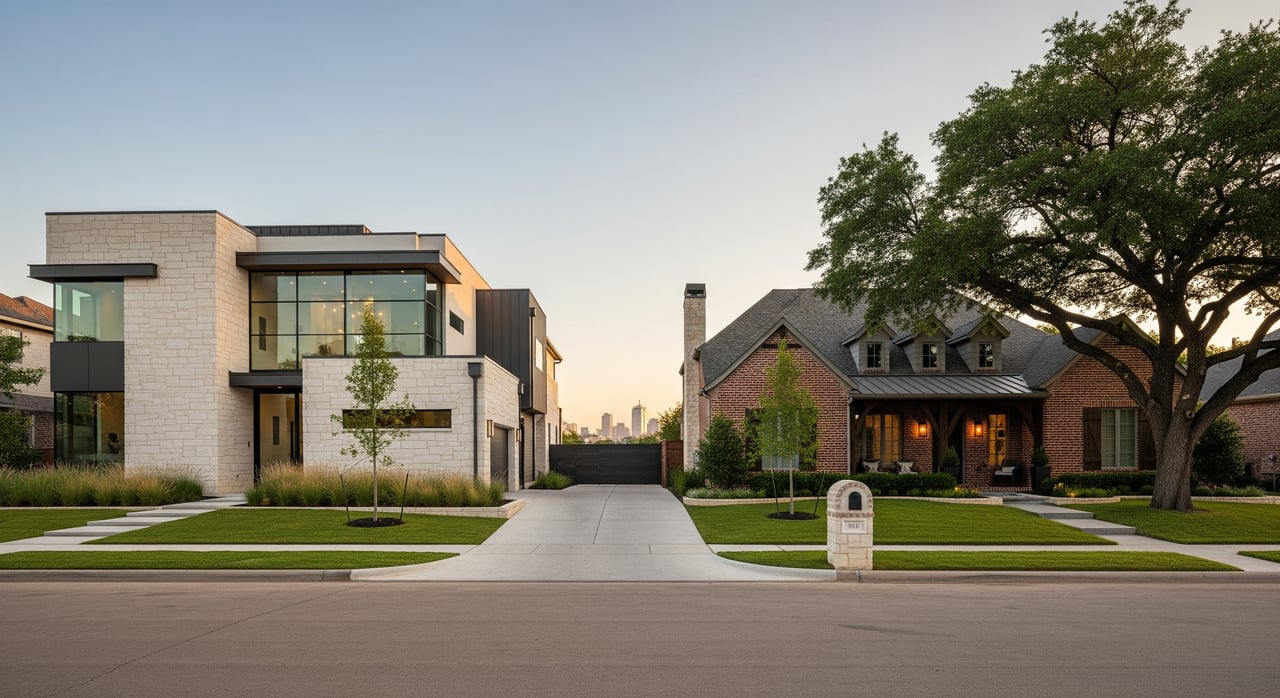
Thinking about a new-build home or a resale in Tarrant County? You are not alone. The Fort Worth–Arlington area offers both modern master-planned communities and established neighborhoods, each with different costs, timelines, and tradeoffs. This guide shows you how to compare new construction and resale homes so you can move with confidence. Let’s dive in.
How Tarrant County markets differ
Tarrant County is diverse. Your choice often starts with location and product type rather than age alone.
- Central Fort Worth, Near Southside, and the Cultural District lean toward resale homes on smaller lots. You get proximity to downtown and walkable amenities, but homes may need renovation.
- Arlington and Mansfield offer a mix of new subdivisions and resales. Entertainment venues and community amenities shape priorities for many buyers.
- The Alliance corridor, Saginaw, Haslet, and parts of Keller feature active new-build communities with larger-lot options. The housing stock skews newer and suburban.
- Southlake, Westlake, and fringe Keller areas carry higher price points with both luxury new builds and high-quality resales.
- Exurban pockets like Justin, Azle, and areas influenced by Weatherford offer larger-lot new construction with lower density and longer commutes.
The takeaway: start with your daily life map. Commute patterns, neighborhood character, and lot size will steer you toward either established resale areas or newer subdivisions where builders are active.
Cost and timelines
Purchase price and premiums
New construction often carries a premium for modern design, energy-efficient systems, and the ability to personalize finishes. The premium varies by builder, lot, and community. Resale prices rely on local comparable sales, age, and condition. In a cooling market, some resales can price below replacement cost. In a hot market, certain resales can outpace nearby new builds.
Upgrades, allowances, and change orders
A new-build base price usually includes a standard package. Popular finishes, appliances, and landscaping are often upgrades. Builders may also use allowances for items like flooring or lighting. Keep a firm budget and track change orders. Unplanned selections are a common source of cost creep.
Closing costs and incentives
Builders frequently use incentives to move inventory. You may see closing-cost credits, interest-rate buydowns, temporary buydowns, prepaid HOA dues, or appliance packages. Incentives tend to be strongest on completed spec homes or when a builder is moving between phases in a community. Resale sellers can also offer concessions, such as repair credits or closing help, depending on market conditions.
Financing and timing
- Resale: most financed purchases close in about 30 to 45 days after contract acceptance.
- New construction: timing depends on product type. Spec homes can close in a few weeks if complete. Pre-sale or custom builds often require 4 to 9 months or more. Builders publish schedules, but delays are common, so build in buffer time.
If you are building from the ground up, you may use a construction-to-permanent loan or a two-step loan. Coordinate early with your lender and builder, especially if incentives depend on a preferred lender. If you are selling a current home, plan for carrying costs such as interim interest, temporary housing, or a dual-mortgage overlap.
Taxes, appraisals, and insurance
New homes can be tricky to appraise in brand-new communities because comparable sales may lag. County appraisal timing can also affect assessed values early on. Insurance is typically straightforward for new systems, but premiums depend on site-specific risk factors like flood exposure. Resale homes may have older roofs, plumbing, or electrical that influence both inspection outcomes and insurance.
Operating costs and energy efficiency
Newer homes usually offer modern mechanicals and higher energy-efficiency standards, which can lower early utility costs. Actual savings depend on equipment choices and your usage. Resales might need near-term updates to HVAC, roof, or electrical. Include those items in your total cost of ownership.
Warranties, inspections, and risk
Typical builder warranty structure
Many Texas builders use a layered warranty pattern often summarized as 1-2-10: one year for workmanship and materials, two years for systems such as plumbing and electrical, and ten years for major structural coverage. Terms vary by builder, so get the exact warranty and claims process in writing. Note whether the builder or a third-party company administers claims and what notice windows apply.
Inspection milestones for new builds
Hire an independent inspector, even for new construction. Recommended checkpoints include:
- Pre-drywall: framing, rough mechanicals, structural connections.
- Near completion: systems testing and function.
- Final walk-through: punch-list items and documentation of condition.
Builders often require you to submit punch-list items within specific windows after closing. Know your deadlines.
Common issues to watch
New builds can present trim and finish gaps, minor settlement cracks, HVAC balancing problems, door or window alignment, and grading or drainage concerns. In high-volume environments, workmanship on mechanicals can vary. For resales, watch for hidden defects, foundation movement, pest activity, or older, noncompliant improvements. Use your inspector’s recommendations to decide if you need specialists for roofing, foundation, or sewer.
Remedies and enforcement
Carefully review builder contracts for remedies, warranty limits, and any arbitration clauses before you sign. For resales in Texas, seller disclosure laws apply, and your protection comes from strong inspections, repair negotiations, and contingencies. If you have questions about legal remedies, discuss them with your agent and, when appropriate, your attorney.
Negotiation leverage and broker strategy
Where leverage sits with new builds
- Completed spec homes: builders are often more flexible on price or incentives.
- Phase timing: moving from model openings to larger releases can trigger discounts or incentives.
- Preferred lenders: incentives can be tied to specific lenders. Weigh the total benefit after fees and rates, not just the headline credit.
Where leverage sits with resales
- Days on market: longer exposure can open the door to price or closing-cost concessions.
- Strong financing: cash or a firm preapproval improves your position in competitive areas.
How a buyer’s broker protects you
An experienced broker reviews builder agreements against local norms and points out clauses that affect you. Your broker can negotiate clearer inspection windows, defined completion dates with remedies, explicit warranty terms, and punch-list timelines. They coordinate lender and title steps, schedule independent inspections, represent you at walk-throughs, and help document and submit warranty claims after closing.
Practical tactics that work
- New builds: request rate buydowns, closing-cost credits, prepaid HOA dues, landscaping allowances, or targeted upgrades. On spec homes, use comparable sales to support price reductions.
- Resales: use inspection findings to negotiate repairs or credits and request seller-paid costs when conditions allow.
- Contingencies: match your inspection, financing, and appraisal timelines to the build or resale schedule to keep protection strong and the deal on track.
Due-diligence checklist
Use this concise checklist to stay organized:
Contract and legal
- Review the full purchase agreement and all builder addenda before depositing earnest money.
- Confirm warranty scope, durations, and the claims process in writing.
- Check for arbitration or dispute clauses and understand implications.
- Verify where earnest money is held and the conditions for a refund.
Builder and community vetting
- Research builder reputation through prior projects and public records.
- Visit completed homes by the builder and ask for references.
- Review HOA documents, fees, rules, and any special assessments.
Site and lot
- Confirm grading, drainage, floodplain status, and recorded easements.
- Check orientation, proximity to roads, and future adjacent land uses.
- Verify utility connections for sewer, water, gas, and electric.
Inspections and permits
- Schedule independent inspections at pre-drywall, near completion, and final walk-through for new builds.
- Confirm city permits and inspections are signed off before closing.
- For resales, obtain a full home inspection plus any needed specialty inspections.
Financing and appraisal
- Secure a strong preapproval tailored to your product type.
- If using a preferred builder lender, confirm the net benefit after fees.
- Plan for potential appraisal gaps, especially in new subdivisions with limited comps.
Closing and possession
- For new builds, verify the Certificate of Occupancy or municipal signoffs.
- Document the punch-list process and post-closing responsibilities in writing.
- Ensure title search, title insurance, and homeowners insurance are complete.
Post-closing organization
- Photograph and video the home at closing to document condition.
- Keep all warranty paperwork, communications, and inspection reports together.
- Calendar warranty deadlines and submit claims within the required windows.
Which choice fits your goals
Your best option depends on what you value most.
- Speed and certainty: a completed spec home or well-maintained resale can deliver a faster move with fewer unknowns.
- Customization and modern systems: a new build offers design control and lower early maintenance, but you trade for longer timelines and upgrade decisions.
- Budget control: model total cost of ownership. Combine purchase price with upgrades, carrying costs during a build, and expected near-term maintenance for resales.
- Location and lifestyle: established neighborhoods around central Fort Worth and older suburbs skew resale. Many larger-lot options and master-planned amenities are in the county’s newer suburban corridors.
Work with a trusted local advisor
Buying new construction or resale in Tarrant County is not one-size-fits-all. With the right strategy, you can reduce risk, secure better terms, and land in the neighborhood that fits your life. If you want help comparing communities, negotiating builder incentives, or structuring a smooth resale purchase, our boutique team is here to guide you from the first tour to post-closing support. Schedule a consultation with Social Living Real Estate Boutique.
FAQs
What are the biggest cost differences between new and resale homes?
- New builds may include a premium for modern plans and customization, plus upgrades and lot costs, while resales are priced by comps and condition but may need near-term repairs.
How long does a new-build purchase take in Tarrant County?
- Completed spec homes can close in weeks, but ground-up builds commonly run 4 to 9 months or more, and delays are possible, so add buffer time.
Do I still need an inspection on new construction?
- Yes. Hire an independent inspector for pre-drywall, near completion, and final walk-through to catch issues early and document your punch list.
Where do buyers have the most leverage with builders?
- You often have the most leverage on completed spec inventory and during community phase transitions, especially when you can compare incentives across nearby projects.
What protections matter most in a resale contract?
- Strong inspection, financing, and appraisal contingencies, plus clear repair or credit terms based on inspection findings, help protect your interests.
How do builder incentives with preferred lenders work?
- Builders may tie credits or rate buydowns to using a preferred lender. Compare total costs and terms to ensure the incentive delivers a net benefit.